
In 1876, Peter Batholomew built a shingle mill at the foot of Brock Street which extended into Gull Lake, near where the Barge walkway exists today. In that same year, William Fraser built a lumber mill on Gull Lake at Moody Lane. In 1879 Charles Cane built a shingle mill on Gull Lake at the foot of Brock Street about where the block lifeguard building is now located.
From 1942 until 1960, the mills at Gull Lake made way for ice harvesting work during the winter months until the widespread adoption of electric refrigeration made this work obsolete.
During WWII, more than 400 German officers were held as Prisoners of War in Gravenhurst's Camp 20 on Muskoka Lake. Under the Geneva Conventions, POW's who had officer status could not be ordered to do any work of any kind, but an imprisoned officer who had been a landscape architect before the war offered his expertise to design an entrance, a walk-way with steps and wall down to the beach at Gull Lake Park. The town modified his design somewhat but accepted it and allowed a group of the POW’s to build the stone steps and retaining wall along the beach.
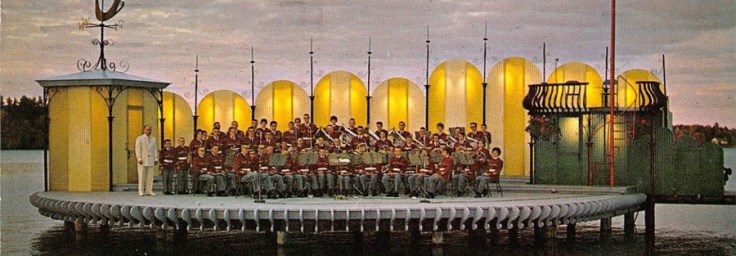
The stage in the water at Gull Lake Rotary Park originally required performers to access by boat, but a bridge connecting the stage and land was added as part of its official opening event with Queen Elizabeth II on July 4, 1959. The music still plays for anyone who wants to enjoy the free concerts that play on this stage every Sunday each summer.